Production Never Lies
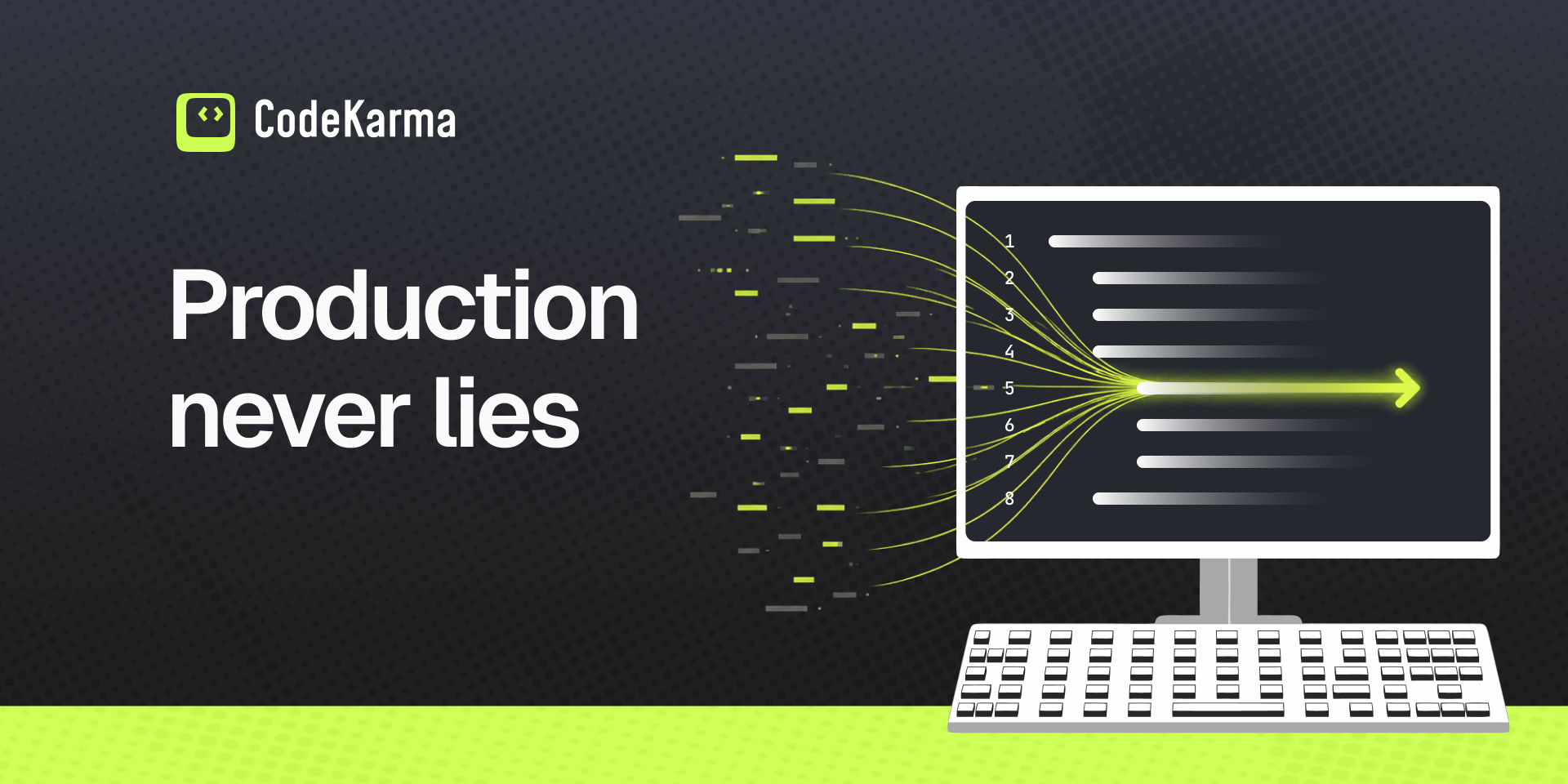
Most engineering arguments are arguments about what is happening.
A senior engineer says one thing. A platform engineer says another. The architect has a diagram. The dashboard has a number. The runbook has a paragraph from two years ago.
Everyone is partly right, which is the same as everyone being slightly wrong. Underneath all of it, the system is running. It is doing exactly what its code, config, and traffic make it do. It has no opinion about it.
Production never lies. It just rarely gets a chance to speak directly.
What Teams Are Actually Arguing About
Walk into any incident bridge or migration meeting. Most of the time is not spent fixing things. It is spent reconstructing things.
- Which services touched this flow?
- Whether that queue is still used?
- Whether anyone calls the old endpoint?
- Which deploy changed the latency curve?
- Whether removing this method is safe?
These questions sound technical. They are mostly archaeological.
The team is digging through logs, traces, dashboards, code, Slack threads, and memory to assemble a story about a system that is, at that exact moment, telling the full story by running.
The gap is not data. It is interpretation.
Modern Engineering Teams Are Not Short on Data
Teams already have:
- Telemetry
- Traces
- Alerts
- Code search
- Architecture diagrams
- AI tools that can summarise all of it
What they are short on is a shared, current, behavioural view of what the software is actually doing.
Signals are fragments. Behaviour is the whole.
- A trace is one journey
- A metric is one angle
- A diagram is one belief
- Behaviour is the system’s own answer
Signals are interpreted. Behaviour is observed.
The Shift
The shift is not about collecting more. It is about listening differently.
Instead of reconstructing what the system did from a handful of signals, teams need to see what the system is actually doing:
- Which services talked to which?
- Which code paths ran?
- Which APIs are alive and which are dormant?
- Which flows carry the real traffic?
That view changes the work.
- Onboarding gets shorter
- Changes get safer
- Modernisation stops being a guessing game
- AI tools stop hallucinating about systems they cannot see
This is the direction CodeKarma is built around — Making production behaviour a first-class input into how engineering teams think, decide, and build.
The system has been telling the truth the whole time. The job now is to listen to it directly.